

From Doing to Being
January 5, 2026
They Were Italians When They Arrived
February 2, 2026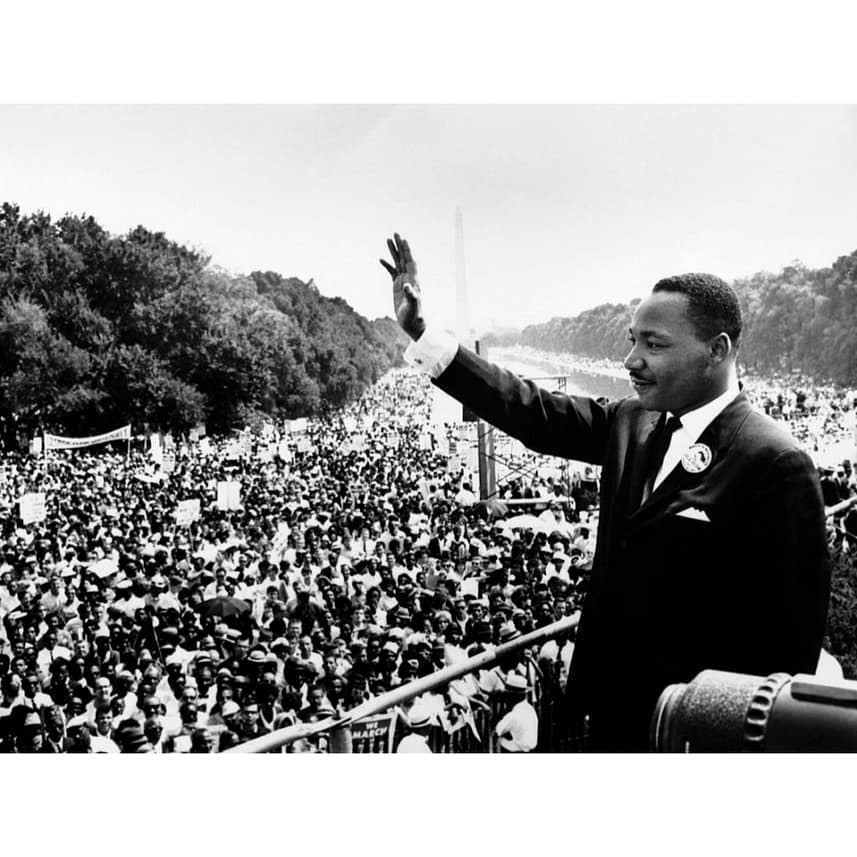
What Martin Luther King Jr. Warned Us About
I write this with a heavy heart and a quiet fear that the wisdom passed down from men with vision greater than our own has been twisted beyond recognition. Words once meant to expand dignity and understanding are now often repurposed to narrow them. Teachings rooted in courage, restraint, and moral humility are frequently invoked without the discipline those virtues require.
In contemporary public life, unity is often spoken of, but conformity is frequently demanded. Agreement is treated as virtue. Dissent is framed as disloyalty. What gets called moral certainty today is often something narrower: certainty that forecloses engagement rather than certainty that survives it. This posture is often justified in the name of justice, progress, or righteousness. Yet it stands in direct opposition to what Martin Luther King Jr. actually taught.
King did not preach uniformity of thought. He did not call for ideological sameness. He did not ask society to mature by silencing disagreement or flattening complexity. Quite the opposite. He believed that a healthy society requires tension. Not destructive tension, but the creative tension that emerges when differing ideas are allowed to meet, challenge one another, and refine one another.
King was not a man of moral ambivalence. He held firm, public, unwavering conviction that segregation was evil and that justice delayed was justice denied. His certainty was not the problem he diagnosed. What he refused was using that certainty as a reason to stop listening, to write off the people who disagreed with him, or to treat opposition as something to be silenced rather than engaged. In his Letter from Birmingham Jail, he wrote that nonviolent direct action seeks to create the kind of tension that forces a community to confront truths it has been able to ignore. Tension, for King, was not something to eliminate but something to steward. It was evidence that growth was underway.
Today’s political rhetoric often seeks the opposite. It aims to eliminate tension by eliminating opposing viewpoints. It categorizes people quickly and permanently. It reduces complex human beings to labels, assumes intent without curiosity, and treats disagreement itself as moral failure. This is not the path King envisioned.
King believed that peace is not the absence of tension. It is the presence of justice combined with mutual recognition of dignity. He understood that pluralism is not a threat to society but a requirement for its maturation. Different perspectives are not obstacles to progress. They are the very mechanism by which societies learn, adapt, and become more humane.
A society that demands ideological alignment cannot grow. It can only harden. When individuals are pressured to repeat approved language rather than speak honestly, dialogue collapses. When fear of social punishment replaces good faith engagement, trust erodes. King understood that forced consensus produces surface calm while deepening fracture beneath it.
True nonviolence, as King practiced it, was not passive. It required courage. It required listening to views one found troubling. It required holding one’s convictions firmly while resisting the urge to dehumanize those who disagreed. That ethic is largely absent from modern discourse.
King’s vision was not a world where everyone thought alike. It was a world where people learned to live together despite their differences. Where disagreement did not require domination. Where justice did not demand silence. Where moral progress was measured not by who was excluded, but by how widely dignity was extended.
If we are honest, much of today’s rhetoric would have alarmed him. Not because it seeks change, but because it often seeks conformity without conversation. King knew that peace built on enforced agreement is fragile. Peace built on mutual respect, even amid disagreement, endures.
Wisdom Beneath the Canopy reminds us that growth happens slowly, unevenly, and often uncomfortably. The task is not to eliminate differing viewpoints, but to remain present with them. To listen. To respond thoughtfully. To resist the temptation to simplify a complex human world into slogans.
That was King’s work. It remains ours.