
How Do You Want to Be Known? Hypocrisy, Integrity, and the Test of Leadership
September 24, 2025
Beyond Anecdotes: Why Leadership Needs Neuroscience, Behavioral Science, and Somatics
October 20, 2025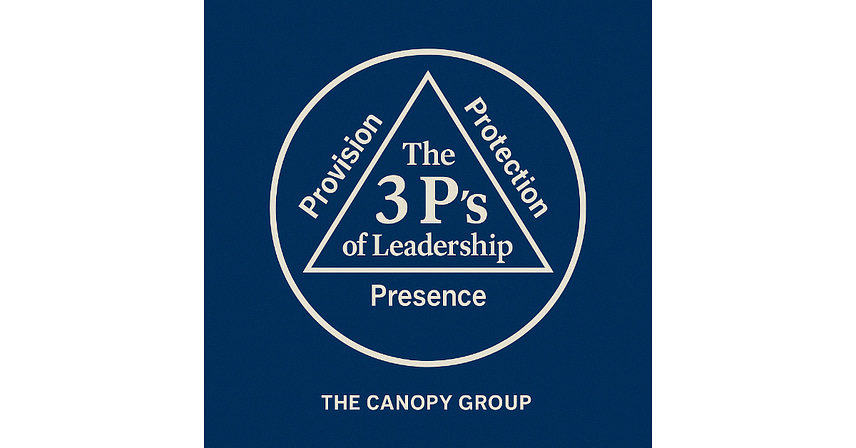
The 3 P’s of Leadership: Provision, Protection, and Presence as the Foundations of Climate and Effectiveness
By Nick Aitoro
Introduction
Leadership is often defined in terms of influence, strategy, or vision, but research consistently shows that what matters most is the climate leaders create. Organizational climate—the lived experience of policies, practices, and leadership behaviors—predicts engagement, retention, productivity, and profitability more reliably than any stand-alone engagement initiative.
The **3 P’s of Leadership—Provision, Protection, and Presence—**offer a practical framework for understanding how leaders shape climate and, in turn, organizational outcomes. These three responsibilities align directly with decades of empirical research on managerial effectiveness, organizational culture, and climate-driven performance.
Provision: Creating the Conditions for Effectiveness
Provision is the leader’s responsibility to ensure people have the resources, clarity, and support required to perform effectively. As Zillioux argued in Any Manager’s Clear Responsibility, effectiveness is measured in outputs, not inputs—and managers who fail to provide tools, information, and authority create climates of frustration rather than performance.
From a climate perspective, provision equates to role clarity, adequate resources, and developmental support, all of which consistently predict engagement and discretionary effort. From a cultural perspective, provision aligns with clear expectations, recognition, and cultural clarity, the first productivity tools identified in SDW’s effectiveness research.
Examples in casino hospitality:
- Dealers supplied with digital table ratings systems so they can accurately track play and comps, reducing guest disputes and frustration.
- Housekeeping teams equipped with mobile room-status devices, ensuring smooth communication with the front desk and faster turnaround for guests.
In short: Provision equips people not only to work but to thrive.
Protection: Safeguarding People and Systems
Protection is more than crisis management; it is the leader’s ongoing duty to ensure safety, fairness, and systemic integrity. Zillioux’s effectiveness studies revealed that role ambiguity, cultural contradiction, and rigid styles consistently destroyed productivity—reducing output by as much as 30–40%.
This responsibility is reinforced by Amy Edmondson’s research on psychological safety, which demonstrates that employees perform at higher levels when they feel safe to speak up, take risks, and admit mistakes without fear of humiliation or punishment. In The Fearless Organization, Edmondson makes the point plainly:
“Fear is the enemy of learning.”
A fearless workplace is one where ideas, questions, and concerns can be raised without retaliation. Leaders who protect their people in this way not only reduce preventable errors but also unlock innovation and adaptability.
Examples in casino hospitality:
- Security leaders conducting proactive but guest-friendly floor patrols that protect both the gaming environment and the guest experience.
- Scheduling practices in Food & Beverage designed to rotate late shifts fairly, protecting employees from burnout and resentment.
Thus, Protection is not paternalism—it is stewardship: safeguarding the energy of people and the coherence of systems so that performance is sustainable.
Presence: Anchoring Climate Through Leadership Behavior
Presence is the most human of the three P’s. It is the leader’s ability to show up consistently, visibly, and authentically. Presence builds trust, aligns culture with lived reality, and prevents what SDW research calls “style drift”—the tendency for managers to default to ineffective habits when clarity is lacking.
Edmondson’s Fearless Organization highlights the leader’s role in modeling openness as a key driver of psychological safety. Leaders who demonstrate humility, curiosity, and active listening create climates where employees feel permission to contribute ideas and challenge assumptions. As she notes, building a fearless organization requires leaders to “replace silence with voice.”
Examples in casino hospitality:
- A general manager helping at the front desk during peak Friday check-in, showing team members that leadership shares responsibility in stressful moments.
- A slot operations director walking the floor daily, greeting players by name while checking in with attendants to address issues in real time.
In practice, Presence signals value and meaning: I see you. I hear you. You matter.
The 3 P’s in the Climate–Culture–Effectiveness Chain
When integrated, the 3 P’s function as the levers through which leaders shape climate and culture, thereby enabling effectiveness:
- Provision → Resources, clarity, and alignment → Productivity and satisfaction
- Protection → Safety, fairness, and psychological safety → Trust and stability
- Presence → Authentic leadership behaviors → Engagement and collaboration
These align with SDW’s Effectiveness Equation:
Productivity = Individual Capability × Cultural Support × Psychological Security.
They also address the core findings of The Climate Advantage: climate is the lead domino in the chain that drives engagement and performance.
Conclusion
Provision, Protection, and Presence are not abstract ideals but measurable leadership responsibilities. They represent the manager’s clear responsibility to shape climate, align culture, and unleash effectiveness.
The evidence is unequivocal: organizations that get climate right see 21% higher profitability, 17% higher productivity, and 40% improvements in cultural alignment outcomes. Leaders who provide, protect, and are present create climates where engagement is not pursued but inevitable.
As Edmondson reminds us in The Fearless Organization, the greatest advantage comes when people can bring their full voice to the table. Leaders who embody the 3 P’s create precisely that kind of fearless climate—one where people can thrive, innovate, and deliver results that matter.
References
- Edmondson, A. (1999). Psychological safety and learning behavior in work teams. Administrative Science Quarterly, 44(2), 350–383.
- Edmondson, A. (2018). The Fearless Organization: Creating Psychological Safety in the Workplace for Learning, Innovation, and Growth. Wiley.
- Zillioux, D. M. (2013). Any Manager’s Clear Responsibility. SDW.
- Zillioux, D. M., & Nathan, A. (2025). The Climate Advantage. SDW.
- Zillioux, D. M. (2023). How Do Organizational Culture and Leadership/Management Styles Affect Employee Job Satisfaction and Organizational Performance? SDW.
- Zillioux, D. M. (2025). The Effectiveness Revolution: How We Proved Culture Drives Performance. SDW.
- Herzberg, F. (1966). Work and the Nature of Man. World Publishing.
- Drucker, P. (1974). Management: Tasks, Responsibilities, Practices. Harper & Row.