

Where Souls and Bodies Collide: The Fine Line Between Connection and Losing Yourself
July 5, 2026
Sacrifice
July 20, 2026
Emotional Intelligence as the Neurobiological Foundation of Sustained Team Member Engagement
By Nick Aitoro
Abstract
This article challenges the prevailing organizational orthodoxy that treats team engagement as a behavioral outcome driven primarily by external incentives or cultural programming. Instead, it advances a transdisciplinary thesis: sustained engagement is first a neurobiological state that precedes and enables its behavioral expression.
Integrating the DRENICA competency framework with the foundational scholarship of Goleman, Edmondson, and Rock, the author argues that Emotional Intelligence is not merely a soft skill, but the regulatory architecture of the professional environment. Central to this argument is the stabilization of the Reaction Gap, the critical neurocognitive interval between stimulus and response. The paper demonstrates that high-EI leadership provides the physiological containment necessary to preserve executive functioning and maintain autonomic stability under high-stress conditions.
By synthesizing the existential insights of Viktor Frankl and Carl Jung with contemporary neuroscience, this research proposes that engagement is the observable manifestation of an emotionally regulated leadership system. The analysis concludes that competency without regulation is inherently unstable, and that psychological safety remains fragile unless grounded in the neurobiology of safety. Organizational engagement becomes sustainable only when leadership behavior is deliberately aligned with the biological requirements of the human brain.
Problem Statement: The Regulatory Crisis of Engagement
The Paradox of Surface-Level Intervention
Despite decades of empirical research linking employee engagement to elevated performance and discretionary effort, sustained engagement remains elusive. Conventional interventions such as periodic climate surveys, tiered incentive programs, and expanded recognition initiatives rarely produce durable, longitudinal impact. These strategies target observable behavior while overlooking the physiological conditions that make commitment possible. The result is episodic activation rather than systemic stability, and chronic volatility rather than organizational coherence.
The Conceptual Deficit
The repeated failure of these initiatives reflects a foundational category error: engagement is treated as a behavioral decision instead of a neurobiological state. Contemporary organizational environments are characterized by persistent ambiguity, accelerated performance expectations, and continuous social comparison. From a neuroscientific standpoint, these conditions are not neutral pressures. They operate as sustained activators of the brain’s threat-detection systems, particularly within limbic circuitry responsible for evaluating risk and social standing.
When leaders attempt to drive engagement without addressing these underlying neural dynamics, they inadvertently intensify the very conditions that suppress it.
The Biological Constraint
In environments dominated by threat-based activation, the brain reallocates metabolic resources toward short-term survival priorities. Executive networks associated with cognitive flexibility, strategic reasoning, and emotional regulation become less accessible. This neurophysiological shift expresses itself organizationally in three predictable patterns:
- Cognitive Narrowing: Reduced cognitive flexibility, diminished divergent thinking, and impaired capacity for complex problem solving.
- Defensive Posturing: Heightened risk aversion, the formation of psychological silos, and increased interpersonal friction.
- Regulatory Exhaustion: Progressive depletion of the metabolic and emotional resources required to sustain discretionary effort and relational investment.
These outcomes are not moral failings or deficits of character. They are predictable consequences of sustained autonomic activation.
The Core Assertion
The contemporary engagement crisis is not fundamentally a problem of motivation. It is a problem of regulation. Engagement cannot stabilize within a chronically dysregulated system. Until leadership shifts from attempting to manipulate external behaviors to deliberately managing the neurobiology of safety, engagement will remain fragile and episodic. Only when physiological regulation becomes foundational to leadership practice can engagement transition from a transient byproduct to a durable competitive advantage.
Research Question
To what extent does emotionally intelligent leadership function as the primary neurobiological regulator of sustained team engagement, and how does stabilization of the Reaction Gap enable the consistent activation of DRENICA competencies under high-stress conditions?
Methodology: Integrative Conceptual Synthesis
Research Design
This article employs an integrative conceptual synthesis methodology designed to bridge neurobiological theory and applied organizational leadership. Rather than isolating constructs within disciplinary silos, the research critically analyzes and synthesizes peer-reviewed scholarship across neuroscience, emotional intelligence, psychological safety, and social threat theory. The objective is not descriptive aggregation, but theoretical integration. Each domain is examined for its explanatory contribution to a unified regulatory model of leadership and engagement.
Theoretical Framework
The synthesis draws together several foundational constructs to develop a coherent architecture of leadership regulation:
- Neurobiological Systems: The SCARF model and contemporary threat-response research provide the social neuroscience foundation for understanding how status, certainty, autonomy, relatedness, and fairness are encoded as neural safety or threat signals.
- Psychological Safety: Edmondson’s framework for interpersonal risk-taking establishes the relational conditions under which executive functioning, learning behavior, and collaborative performance become accessible.
- Existential and Cognitive Architecture: Frankl’s articulation of the space between stimulus and response and Jung’s model of conscious observation supply the phenomenological structure of the Reaction Gap, linking subjective awareness to regulatory capacity.
- Applied Leadership Competency: Goleman’s domains of emotional intelligence and the DRENICA competency framework operationalize regulation within observable leadership behaviors and performance outcomes.
These constructs are not treated as parallel theories, but as interlocking explanatory layers. Social threat theory clarifies the biological substrate. Psychological safety defines the relational climate. Existential and analytical psychology articulate the inner architecture of response. Emotional intelligence and DRENICA translate regulation into consistent leadership enactment.
Translational Objective
The primary aim of this methodology is translational. By interpreting neuroscientific findings through the lens of leadership behavior, the paper reframes organizational culture and climate as emergent properties of regulated or dysregulated human nervous systems. Culture is not static policy, nor climate a passive atmosphere. Both are constructed through the cumulative effect of moment-to-moment interactions shaped by emotional regulation.
Through this integrative synthesis, abstract biological principles are converted into a practical leadership architecture centered on stabilization of the Reaction Gap. In doing so, the paper connects existential philosophy, social neuroscience, and applied leadership competency into a single unfolding argument: sustainable engagement is not engineered through programs, but regulated through leaders.
As a conceptual synthesis, this study advances a theoretically integrated model rather than an empirically tested framework, and its propositions require future validation through longitudinal, neurophysiological, and organizational performance research designs.
Literature Review: The Neuro-Regulatory Foundations of Leadership
I. Emotional Intelligence as Regulatory Architecture
Emotional intelligence, defined through Goleman’s four-domain model of self-awareness, self-regulation, social awareness, and relationship management, represents more than a psychological skill set. At the neurobiological level, these capacities reflect effective modulation of limbic activation by prefrontal cortical systems, particularly the medial prefrontal cortex (mPFC) and anterior cingulate cortex (ACC). These regions support inhibitory control, error monitoring, and affect integration, enabling individuals to respond rather than react.
Under acute stress, heightened amygdala activation can disrupt prefrontal inhibitory efficiency. This phenomenon, often described as limbic hijack, is associated with cognitive narrowing, increased emotional reactivity, and diminished perspective taking. When prefrontal regulation weakens, strategic reasoning and integrative judgment become less accessible.
Emotionally intelligent leaders function as regulatory anchors within the organizational system. Through accurate recognition of internal affective shifts and deliberate inhibition of impulsive responses, they preserve executive access under pressure. In doing so, they maintain cognitive flexibility and relational stability even when environmental demands intensify.
II. The Reaction Gap and RMSSD: A Neuro-Executive Proxy
Viktor Frankl described the space between stimulus and response as the locus of human freedom. Carl Jung articulated conscious observation as the capacity to witness emotion without over-identification. Contemporary neuroscience situates this Reaction Gap within the functional integrity of medial and dorsolateral prefrontal inhibitory networks that modulate limbic salience processing. Operationally, the Reaction Gap reflects preserved executive inhibition during autonomic arousal.
The Vagal Brake and Cognitive Bandwidth
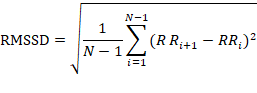
This regulatory capacity can be indexed physiologically through RMSSD, the Root Mean Square of Successive Differences. As a primary time-domain metric of heart rate variability, RMSSD quantifies short-term beat-to-beat variability mediated predominantly by parasympathetic vagal influence.
The formula is expressed as:
Root Mean Square of Successive Differences (RMSSD)
The RMSSD is calculated as:
Expanded Stepwise Expression

Where:
= the i-th R–R interval (time between successive heartbeats)
= the subsequent R–R interval
= total number of R–R intervals
= summation of successive interval differences
Each squared term represents the magnitude of change between successive interbeat intervals. The mean of these squared differences is then square-rooted, returning the metric to millisecond units.
Within this architecture, higher RMSSD reflects stronger parasympathetic modulation and a more effective vagal brake. Functionally, this supports continued prefrontal inhibition of amygdala-driven threat signaling. A leader can encounter a stressor at one cardiac interval without reflexively shifting into sympathetic dominance at the next. Variability between successive intervals becomes a physiological correlate of preserved executive space.
State-Dependent Access: The Physiological Threshold
Leadership capability is state-dependent rather than purely knowledge-dependent. When RMSSD declines below an individual’s functional regulatory threshold, prefrontal inhibitory efficiency weakens. The Reaction Gap narrows as limbic salience processing begins to outpace cortical modulation.
Accessibility Versus Acquisition
Leadership breakdown in high-pressure environments rarely reflects insufficient training. More often, it reflects impaired access to neural circuitry that has already been developed. Competence may be structurally present, yet functionally unavailable.
Physiological Constraint
As parasympathetic influence diminishes and sympathetic activation increases, higher-order cortical functions such as strategic integration, impulse control, and ethical reasoning become physiologically constrained. These functions are not erased; their accessibility is reduced due to diminished top-down inhibitory signaling.
Cognitive Narrowing
Reduced inhibitory signaling from the mPFC and ACC permits increased amygdala-driven salience amplification. Nuanced appraisal gives way to binary categorization and defensive orientation. Cognitive bandwidth contracts accordingly.
Regulatory Exhaustion
Sustained reductions in RMSSD correlate with diminished adaptive flexibility and reduced executive variability. Under conditions of regulatory exhaustion, discretionary effort and innovation are constrained because executive integration is metabolically and autonomically compromised.
Preservation of RMSSD is therefore not a peripheral wellness marker. It represents a neuro-executive prerequisite for maintaining the Reaction Gap and ensuring leadership competencies remain accessible under pressure.
III. Psychological Safety and the SCARF Model
Psychological safety, defined as the shared belief that the environment is safe for interpersonal risk-taking, represents the behavioral expression of reduced social threat activation. Rock’s SCARF model identifies five neural domains that drive social threat and reward responses: Status, Certainty, Autonomy, Relatedness, and Fairness.
Neuroscientific evidence indicates that social threats, such as public criticism, exclusion, or perceived unfairness, activate neural circuitry overlapping with physical pain processing. When these domains are destabilized, threat detection systems intensify, narrowing cognitive capacity and increasing defensive behavior.
Emotionally intelligent leadership stabilizes these domains by protecting status through constructive feedback, increasing certainty through transparency, honoring autonomy by minimizing unnecessary control, fostering relatedness through inclusion, and reinforcing fairness through procedural consistency. Psychological safety is therefore not primarily policy-driven. It is a biologically grounded state maintained through consistent regulatory behavior across interactions.
IV. DRENICA Competencies: Accessibility Versus Acquisition
The DRENICA framework identifies core leadership capabilities including strategic thinking, ethical judgment, communication, resilience, and adaptability. These competencies are often framed as skills to be developed through training and repetition. This analysis proposes a complementary position: the consistent enactment of these competencies depends on regulatory accessibility.
Under acute stress, degradation of DRENICA competencies, such as the replacement of nuance with binary thinking, seldom reflects lack of knowledge. Instead, it reflects reduced access resulting from diminished regulatory capacity. When the Reaction Gap collapses and prefrontal inhibition weakens, the biological conditions necessary for strategic and ethical reasoning become constrained.
DRENICA specifies what leadership must demonstrate. Emotional intelligence, supported by preservation of the Reaction Gap and adequate parasympathetic modulation, determines whether those competencies remain neurologically accessible under pressure. Sustained engagement, therefore, rests not only on competency acquisition but on the preservation of the regulatory architecture that makes those competencies reliably executable.
Results: The Architecture of Regulated Engagement
Five central findings emerge from this integrative synthesis, each reinforcing the proposition that engagement is fundamentally regulatory rather than motivational.
1. The Primacy of State over Behavior
Engagement is a neurobiological state that precedes behavioral expression. It is not primarily an act of will nor a simple response to incentives. Rather, it reflects the physiological condition of a brain operating within relative safety and reward orientation. When threat circuitry dominates, discretionary effort, creativity, and collaborative risk-taking become significantly constrained. Behavioral activation depends upon prior state stabilization.
2. Emotional Intelligence as a Prefrontal Stabilizer
Emotional intelligence functions as a primary mechanism for preserving executive access under stress. By stabilizing the Reaction Gap during periods of autonomic arousal, emotionally intelligent leadership reduces the probability of limbic dominance and supports continued engagement of prefrontal networks. This stabilization enables sustained access to strategic reasoning, empathy, impulse control, and ethical judgment during crisis conditions. In high-pressure environments, the leader’s regulatory state becomes a determining variable in organizational performance.
3. The Behavioral Genesis of Safety
Psychological safety is not an abstract cultural aspiration. It is an emergent property of stabilized social threat domains. When leaders consistently protect Status, increase Certainty, honor Autonomy, reinforce Relatedness, and uphold Fairness, they reduce activation within team members’ threat-detection circuitry. Over time, these regulated interactions accumulate, producing a biologically grounded sense of safety. Engagement emerges not from policy declarations but from repeated experiences of reduced social threat.
4. The Predictability of Competency Degradation
Leadership breakdown frequently reflects impaired accessibility rather than insufficient capability. DRENICA competencies such as strategic thinking, adaptability, and ethical discernment degrade predictably under sustained threat activation. As the Reaction Gap narrows and prefrontal inhibition weakens, nuanced appraisal gives way to simplification and defensiveness. This pattern is not random. It is a foreseeable neurophysiological consequence of diminished regulatory capacity, irrespective of prior training or experience.
5. Culture as a Cumulative Regulatory Output
Organizational culture and climate are cumulative outputs of repeated regulatory exchanges.
- Regulated Leadership: When leaders maintain prefrontal access under stress, they model empathy, fairness, and consistency. These interactions reinforce psychological safety and generate an upward regulatory spiral that strengthens engagement over time.
- Reactive Leadership: When leaders operate in persistent threat activation, dysregulation propagates through social contagion mechanisms. Silence, risk aversion, and self-protection replace contribution and innovation. This pattern can be described as contagious dysregulation, where unregulated threat signaling spreads through relational networks and shapes collective behavior.
Across findings, a consistent logic emerges: when leaders are under pressure, their biological state shapes the team’s behavioral climate. Engagement is therefore neither accidental nor cosmetic. It reflects the regulatory integrity of leadership in real time. The DRENICA framework remains essential, but its reliable enactment depends on the preservation of the neurobiological conditions that make competency accessible.
Discussion: From Regulation to Engagement
The Shift from Acquisition to Mastery
The transition from reactive to regulated leadership reflects a measurable shift in autonomic nervous system efficiency. When RMSSD is used as a primary biomarker, the conversation moves beyond subjective descriptions of calmness toward objective indicators of vagal modulation. Elevated RMSSD reflects stronger parasympathetic influence and more effective inhibitory control over threat reactivity.
A leader with higher RMSSD possesses greater physiological bandwidth to encounter a stressor at one cardiac interval without collapsing the executive space required to choose the next response. The variability between RR_i and RR_(i+1) becomes a functional correlate of preserved inhibitory control. This temporal stability under pressure forms the biological substrate of what organizational psychology describes as Emotional Intelligence. Emotional Intelligence, in this framing, is not merely perceptual acuity or relational skill. It is the sustained capacity to preserve executive integration under autonomic load.
The Regulatory Sequence of Engagement
The synthesis of neurobiology with the DRENICA framework reveals a sequential dependency structure. Engagement is not the starting point of the system. It is the final output of a layered regulatory progression:
- Emotional Self-Awareness expands the Reaction Gap by increasing conscious detection of affective shifts.
- An expanded Reaction Gap preserves executive access under stress by maintaining prefrontal inhibitory control.
- Preserved executive access stabilizes the reliable deployment of DRENICA competencies such as strategic reasoning, adaptability, and ethical judgment.
- Stabilized competencies protect and reinforce SCARF domains by reducing social threat activation across Status, Certainty, Autonomy, Relatedness, and Fairness.
- Protected SCARF domains consolidate Psychological Safety as a shared perception of interpersonal security.
- Psychological Safety enables sustained Team Engagement as a predictable behavioral expression of regulated neurobiology.
Each step depends upon the integrity of the preceding layer. When the Reaction Gap collapses, executive access narrows. When executive access narrows, competency reliability declines. When competency reliability declines, social threat increases. Engagement erodes accordingly.
Redefining the Drivers of Engagement
These findings challenge conventional engagement strategies centered on compensation, incentives, and episodic recognition. While such mechanisms may influence short-term motivation, they do not regulate the underlying biological conditions required for sustained discretionary effort.
Engagement emerges from emotionally intelligent presence, behavioral consistency, relational respect, and value-aligned decision-making. These elements are not cosmetic leadership traits. They are regulatory behaviors that reduce social threat and preserve executive integration within teams.
When leaders fail to regulate their own autonomic state, they destabilize the safety architecture of the system. Threat signals propagate through tone, posture, micro-expressions, and decision patterns, shaping collective nervous system responses. Conversely, when leaders consistently preserve the Reaction Gap, they create an environment in which engagement is not coerced or incentivized. It becomes a natural physiological response to perceived safety, predictability, and fairness.
In this model, engagement is neither engineered nor mandated. It is regulated.
Theoretical Synthesis: Somatic Intelligence as the Regulatory Gateway
The Neurobiology of Interoceptive Awareness
While Emotional Intelligence provides the behavioral architecture of effective leadership, emerging neuroscientific evidence indicates that Somatic Intelligence may function as the regulatory gateway to sustained prefrontal access. This process is mediated largely through the insular cortex, particularly the anterior insula, which integrates visceral sensory input and coordinates communication with the medial prefrontal cortex and anterior cingulate cortex.
The anterior insula plays a central role in interoception, the capacity to perceive internal bodily states such as cardiac rhythm, respiratory variation, and autonomic shifts. These signals are not peripheral phenomena. They constitute real-time data about the organism’s regulatory condition. Through its connectivity with prefrontal regulatory networks, the insula informs executive systems about emerging physiological changes before they fully escalate into overt emotional reactivity.
Under acute stress, amygdala activation biases perception toward threat and can rapidly diminish prefrontal inhibitory control. When interoceptive awareness is underdeveloped, this transition may occur outside conscious detection. However, when insula-mediated awareness is refined, subtle autonomic fluctuations, including reductions in heart rate variability or shifts in respiratory rhythm, can be detected in their early phase. This early signal detection enables prefrontal networks to re-engage inhibitory control before full limbic escalation occurs. In this way, regulation becomes anticipatory rather than corrective.
Somatic Intelligence therefore enhances the probability that the Reaction Gap will remain intact. It does not eliminate stress. It improves the timing of regulatory intervention.
Somatic Intelligence as Physiological Infrastructure
Within this expanded model, the insula functions as a bidirectional bridge between bodily awareness and executive governance. Strengthened interoceptive accuracy has been associated with increased functional connectivity among the insula, medial prefrontal cortex, anterior cingulate cortex, and limbic structures. This integration supports more efficient top-down modulation of amygdala-driven threat responses.
If Emotional Intelligence represents the observable behavioral manifestation of regulation, Somatic Intelligence constitutes the physiological infrastructure that supports its reliability. Emotional Intelligence may guide what a leader intends to do. Somatic Intelligence influences whether the neural conditions required to execute that intention remain accessible under pressure.
In high-demand environments, the distinction is consequential. Leaders who cultivate interoceptive precision expand their capacity to detect dysregulation in its earliest stages, preserve executive access, and maintain the stability of the Reaction Gap. Somatic Intelligence, in this formulation, is not an alternative to Emotional Intelligence. It is the gateway that strengthens its durability.
Future Research Directions
Future empirical investigation should focus on validating the relationship between somatic training and measurable organizational outcomes. While the theoretical integration is compelling, longitudinal and neurophysiological validation within executive populations remains essential.
Key areas for further study include:
- Neuroplasticity and Functional Connectivity: Does structured somatic awareness training produce measurable increases in functional connectivity among the anterior insula, medial prefrontal cortex, anterior cingulate cortex, and amygdala in executive populations? Functional MRI and heart rate variability metrics could clarify whether interoceptive training strengthens top-down inhibitory regulation under stress.
- Competency Preservation Under Load: Longitudinal designs should examine whether improvements in validated interoceptive awareness measures correlate with sustained preservation of DRENICA competencies during high-stakes stress exposure. Specifically, do leaders who demonstrate increased somatic awareness show reduced competency degradation when autonomic arousal intensifies?
- HRV and Executive Accessibility: Future research should assess whether sustained increases in RMSSD are associated with greater reliability in strategic reasoning, ethical judgment, and adaptive decision-making under acute performance pressure.
- Psychological Safety as a Downstream Outcome: Experimental studies could evaluate whether teams led by somatically trained leaders demonstrate statistically significant improvements in psychological safety indices and engagement scores relative to control groups.
Advancing this research agenda would move Somatic Intelligence from theoretical construct to empirically grounded intervention, strengthening the scientific architecture linking neurobiology, leadership regulation, and sustained organizational engagement.
The Integrated Architecture of Engagement
This synthesis culminates in a unified, hierarchical model of organizational stability. Engagement is not the starting point of the system. It is the final behavioral expression of a regulated biological sequence:
- Somatic awareness detects early autonomic shifts through insula-mediated interoception.
- Elevated RMSSD reflects a functional vagal brake, limiting sympathetic dominance and preserving regulatory flexibility.
- An expanded Reaction Gap, supported by parasympathetic tone, sustains the executive space required to simulate value-aligned responses rather than reflexive reactions.
- Stable executive access enables consistent deployment of DRENICA competencies under pressure.
- Protected SCARF domains reduce social threat activation across teams.
- Psychological safety consolidates as a shared, biologically grounded perception of interpersonal security.
- Sustained engagement emerges as the observable behavioral outcome of this regulated system.
Within this architecture, engagement is neither manufactured nor mandated. It is the natural behavioral output of aligned neurobiology. Emotional Intelligence remains the regulatory framework that stabilizes leadership behavior. However, Somatic Intelligence emerges as the foundational variable that determines whether Emotional Intelligence remains accessible when it is most needed.
The implications are not cosmetic. Leadership development cannot rely solely on cognitive skill acquisition, competency modeling, or motivational programming. Without deliberate cultivation of regulatory capacity, competency frameworks degrade under stress, psychological safety destabilizes, and engagement fluctuates predictably.
The evidence converges on a single conclusion: sustainable engagement requires biological alignment. This is not a best practice among many. It is a prerequisite. Leadership development that neglects autonomic regulation will continue to produce episodic performance gains and recurrent cultural volatility. Leadership development that integrates somatic awareness, preserves the Reaction Gap, and strengthens executive inhibition builds durable organizational stability.
If engagement is the strategic objective, regulation is the path.
Conclusion: The Biological Imperative of Leadership
Team member engagement is not a motivational slogan or a cultural aspiration. It is the emergent property of emotionally regulated leadership. This synthesis demonstrates that the distance between a leader’s potential and their lived impact is determined by their capacity to manage internal neurobiology under pressure.
The Causal Chain of Performance
Organizational stability is inseparable from the stability of executive functioning within its leadership ranks. The integrated architecture clarifies a direct causal sequence:
- Emotional Intelligence anchors executive stability by preserving inhibitory control and cognitive integration.
- Psychological Safety emerges as the relational outcome of reduced social threat activation.
- DRENICA competencies provide the structured behavioral expression of stabilized leadership capacity.
These elements do not operate independently. They form a layered system in which biological regulation precedes behavioral consistency, and behavioral consistency precedes collective trust.
The Criticality of the Reaction Gap
The defining measure of leadership effectiveness is not the knowledge a leader possesses in moments of calm, but the executive access they retain under stress. The Reaction Gap represents the functional space in which values, strategy, and ethical judgment remain available despite autonomic arousal.
When leaders preserve this gap during volatility, engagement stabilizes because teams experience predictability, fairness, and safety. When the gap collapses, competency predictably degrades. Nuance narrows, defensiveness increases, and the safety architecture of the team begins to erode. The outcome is not accidental. It reflects the regulatory condition of the leader in real time.
Final Summary
Leadership development must advance beyond competency acquisition alone. Competency without regulation is inherently unstable. Sustainable engagement requires alignment between leadership behavior and the neurobiological requirements of the human brain.
The imperative is clear: to lead others effectively, one must first master the physiological stewardship of oneself. Engagement is not imposed. It is regulated.
References
Craig, A. D. (2009). How do you feel now? The anterior insula and human awareness. Nature Reviews Neuroscience, 10(1), 59–70. https://doi.org/10.1038/nrn2555
Çitaku, F., & Ramadani, V. (2020). The DRENICA model: A leadership competency framework for effective organizational performance. International Journal of Organizational Analysis, 28(3), 645–662.
Çitaku, F., & Ramadani, V. (2024). Leadership competencies in complex systems: Advancing the DRENICA framework. Journal of Leadership Studies, 18(1), 22–37.
Edmondson, A. C. (2018). The fearless organization: Creating psychological safety in the workplace for learning, innovation, and growth. Wiley.
Frankl, V. E. (2006). Man’s search for meaning. Beacon Press. (Original work published 1946)
Goleman, D. (1995). Emotional intelligence: Why it can matter more than IQ. Bantam Books.
Jung, C. G. (1968). The archetypes and the collective unconscious (R. F. C. Hull, Trans.; 2nd ed.). Princeton University Press. (Original work published 1959)
Porges, S. W. (2011). The polyvagal theory: Neurophysiological foundations of emotions, attachment, communication, and self-regulation. W. W. Norton & Company.
Rock, D. (2008). SCARF: A brain-based model for collaborating with and influencing others. NeuroLeadership Journal, 1, 44–52.
Shaffer, F., & Ginsberg, J. P. (2017). An overview of heart rate variability metrics and norms. Frontiers in Public Health, 5, Article 258. https://doi.org/10.3389/fpubh.2017.00258
Thayer, J. F., Åhs, F., Fredrikson, M., Sollers, J. J., & Wager, T. D. (2012). A meta-analysis of heart rate variability and neuroimaging studies: Implications for heart rate variability as a marker of stress and health. Neuroscience & Biobehavioral Reviews, 36(2), 747–756. https://doi.org/10.1016/j.neubiorev.2011.11.009